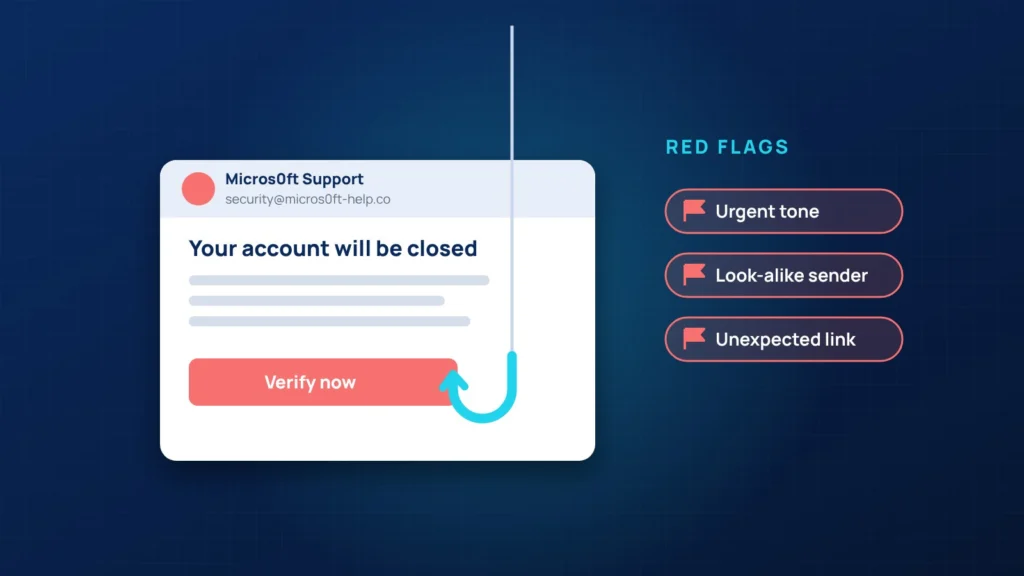
Phishing emails are getting more convincing, especially now that attackers use AI to write them. The good news: a few quick habits still catch almost all of them.
1. Look at the sender’s real address
The display name can say anything. Hover over or tap the name to see the actual address. A message from your bank that comes from a free email account or a misspelled domain is a scam.
2. Distrust urgency
Your account will be closed today. Payment overdue. Gift cards needed before the meeting. Pressure is the attacker’s main tool. Real organizations give you time.
3. Check links before clicking
Hover over a link to see where it really goes. If the address does not match the company, do not click. When in doubt, open your browser and go to the site yourself.
4. Be suspicious of unexpected attachments
Invoices, shared documents and voicemail files you were not expecting are classic delivery methods for malware or fake login pages.
5. Verify money requests by phone
Any change to bank details or any urgent payment request must be confirmed by calling a known number, never the one in the email. This single habit stops business email compromise, one of the most expensive scams for small companies.
What to do if someone clicked
Do not hide it. Disconnect the computer from the network, change the password from a different device, and call your IT provider right away. Fast reporting turns a disaster into a minor incident.
We run short, practical phishing training and simulated phishing campaigns for client teams. See our security services.


